Find the hot zone before blaming the whole deck.
Most hot-deck complaints are local. The boards near the back door may be fine at breakfast and too hot at 3pm. The dining table may sit in full western sun while the lounge corner is comfortable. A charcoal composite sample may feel acceptable in shade and uncomfortable on the exposed pool edge. The first step is to map the hot zone by time of day.
Walk the deck in the morning, early afternoon and late afternoon. Note where bare feet feel uncomfortable, where glare hits eyes, where wind disappears and where furniture is actually used. If the deck is not built yet, do the same exercise on the ground using the proposed footprint. Sun direction matters more than a display-board promise.
In Pakenham, Officer and Beaconsfield, exposed west-facing yards can carry heat late into the day. In the hills, trees may shade parts of the deck while a single opening lets strong sun hit one corner. A useful design responds to the actual path of sun and users, not just the compass direction.
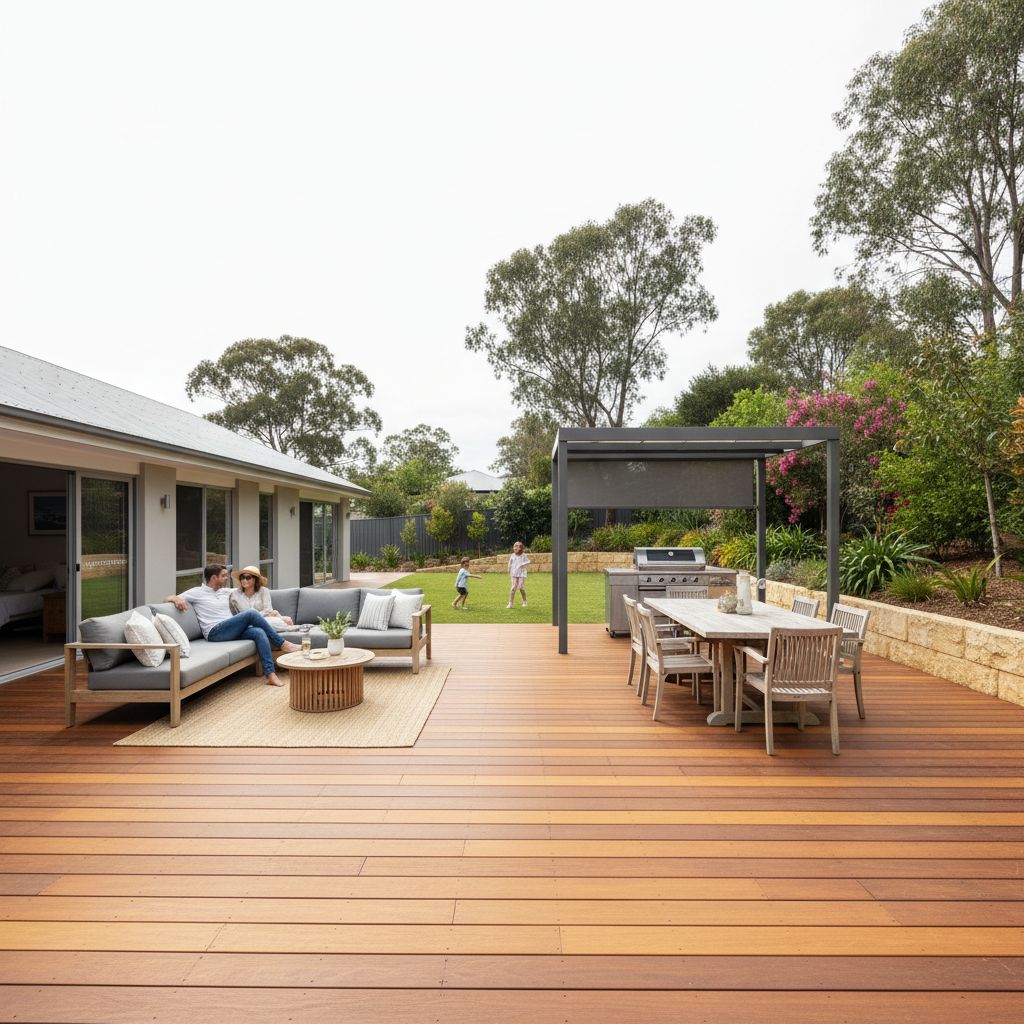
Board colour and material change barefoot comfort.
| Choice | Comfort effect | Trade-off |
|---|---|---|
| Lighter composite | Usually better than dark composite in exposed sun. | Can show dirt and may not match darker cladding or fences. |
| Darker composite | Can look sharp and hide some marks. | Often feels hotter under bare feet in full sun. |
| Natural timber | Often feels more forgiving underfoot when maintained. | Needs oiling and can still heat up, split or grey without care. |
| Mixed surface | Lets timber or composite sit where people gather and paving handle exposed utility zones. | Needs careful level and drainage detailing. |
The mistake is picking the board from a screen or showroom rack. Real samples should sit in the actual yard. Compare samples in the intended location without exposing bare skin to a potentially hot surface. Keep children and pets away from the samples, keep footwear on and ask the supplier for relevant temperature data and its limitations.
The timber versus composite guide explains the wider maintenance and cost trade-offs. For heat, the question is narrower: what will this board feel like on this site at the time people use it?
Shade should land where people sit, not where posts are easiest.
A pergola or veranda can make a deck usable, but only if the shade reaches the right part of the deck at the right time. A roof over the door may protect the threshold and still leave the dining table baking. A deep fixed roof may solve summer heat and make the living room dark in winter. A shade sail may cool the seat but send rain exactly where you do not want it.
The best shade plan starts with use. Where does the barbecue stand? Where do children sit? Where does the person cooking stand at 5pm? Where is the door track? Once the hot zones and use zones are clear, the shade type becomes easier to choose.
Open pergolas, roofed verandas, adjustable louvres, retractable awnings, umbrellas and planting all have a place. The pergolas and verandas page covers the service side, while this page is about comfort. If the structure has a roof or forms part of broader building work, permit checks may be needed, so shade should be discussed before the deck is framed.
Airflow helps people and boards.
Hot decks are often still decks. High fences, solid screens, heavy planting and boxed-in edges can trap still air. That makes people uncomfortable and can keep the underside damp in cooler months. The trick is to shade without suffocating the space.
Slatted screens, open pergola sides, gaps under benches and planting that filters sun rather than forming a solid wall can all help. If privacy is needed, target the line of sight instead of closing every edge. In small yards, this is especially important because a full-height privacy wall can fix one problem and create heat, echo and damp.
Airflow also protects the frame. The drainage and ventilation guide explains why a shaded deck still needs drying paths below the boards.
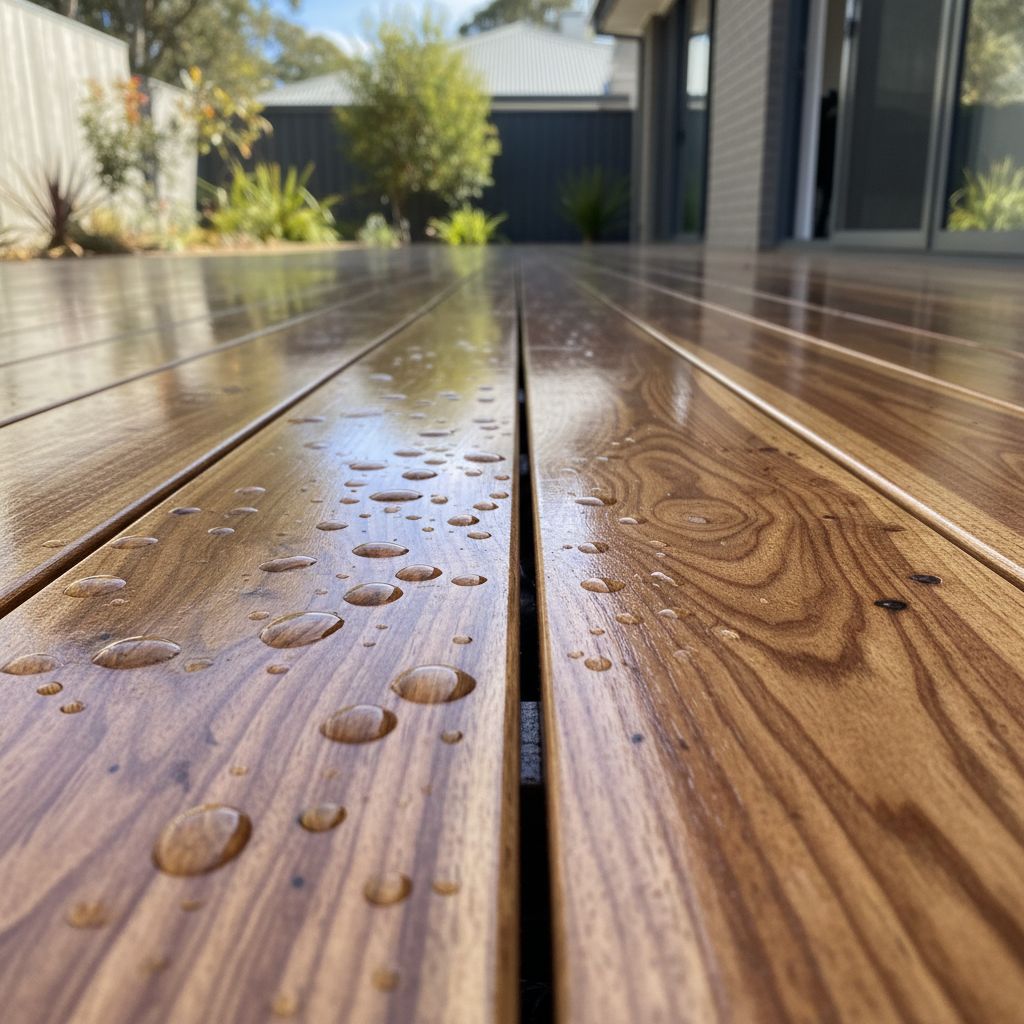
Existing hot decks can often be improved.
If the deck is structurally sound, heat fixes do not always require a rebuild. Start by moving the activity. Put the dining table in the naturally cooler zone and use the hot edge for pots, storage or a path. Add an umbrella sleeve or freestanding shade where people actually sit. Change dark outdoor furniture, because it can heat the seating area even when the boards are acceptable.
For timber, a maintenance coat in a suitable lighter tone can sometimes reduce heat feel compared with a dark coating, while also refreshing the surface. For composite, replacement is usually the material fix, so shade and layout should be tried first unless the boards are already due for renewal.
Outdoor rugs can help temporarily, but they can also trap moisture and mark boards if left down through wet weather. Use them as seasonal comfort, not as a permanent cover hiding a board or drainage problem.
Compare the shade location before replacing boards.
Draw the deck outline and mark where people actually sit or walk at the times they want to use it. Record the shaded footprint from existing walls, eaves and trees. A roof can shade the centre of a deck at one time while leaving the doorway and seating exposed later. The useful comparison is whether shade reaches the occupied area, rather than how much roof area appears on a plan.
If a temporary arrangement is appropriate, use a correctly installed freestanding shade product according to its instructions to explore a different furniture position. Do not improvise overhead fixings, attach loads to a fence or leave an unsuitable umbrella open in wind. The trial is about locating a comfortable activity zone. Permanent structural shade still needs a suitable design and any required checks.
Compare options without using bare skin, children or pets to test a hot surface. Trex's heat-resistant decking guidance still cautions that boards can become hot in direct sun. Ask suppliers for relevant surface-temperature information, including the test conditions and limitations. An instrument reading can help compare samples under the same conditions, but it does not certify safe contact or predict every summer day. Keep footwear on and keep vulnerable users away from surfaces that may be hot. Record whether glare, radiant heat or lack of shade remains uncomfortable even when the walking surface is covered.
Read the conditions behind a product comparison
A supplier's comparison is most useful when it identifies the exact products, colours and exposure conditions. Ask whether the samples were in the same sunlight for the same period, and whether the result describes the board surface or the surrounding air. A lower reading than another product is not a promise that contact will be comfortable in your yard. Compare maintenance requirements alongside the heat information, particularly if the proposed change involves a new coating or a different cleaning method. Retain the selected product reference and its current care instructions. That makes it easier to discuss any later concern without relying on a photograph of a colour that may resemble several different ranges.
Hot deck diagnosis checklist.
Use this over one warm day before choosing shade or new boards.
Tick a checklist item only after recording that detail. The brief below updates on this page. Your entries are not sent or saved, and completion is not a design or safety approval.
Use the controls above to prepare the questions for your site discussion.
Mistakes and remedies.
Mistake: choosing dark boards for a west-facing barefoot zone.
Remedy: test samples on site and choose for the user. Pool edges, toddler zones and pet paths deserve a cooler surface.
Mistake: adding shade where it looks balanced, not where people sit.
Remedy: map use by time of day. Shade the chair, barbecue position or door path that actually overheats.
Mistake: solving heat by sealing the deck with solid screens.
Remedy: use targeted shade and privacy that still allows air to move.
Mistake: ignoring winter.
Remedy: choose shade that helps summer without making the house and deck damp, dark and unused through winter.
Hot deck questions.
Why does my deck get too hot in summer?
Deck heat usually comes from full north or west sun, dark boards, poor shade, limited airflow, reflective walls or fences and furniture layouts that force people onto the hottest area at the hottest time.
Is composite decking hotter than timber?
Some composite boards, especially darker colours, can feel hotter than many timbers in full sun. Colour, board makeup, airflow and shade matter, so samples should be tested in the actual yard before choosing.
What is the best shade for a Pakenham deck?
The best shade depends on the sun direction and how the deck is used. Pergolas, verandas, retractable shade, umbrellas, trees and screens all work in different situations. The key is shading the seating zone without trapping damp air or blocking winter light unnecessarily.
Can an existing hot deck be improved?
Often, yes. Improvements can include shade, lighter furniture, outdoor rugs, changing the seating zone, adding airflow, refinishing timber in a lighter tone or replacing only the worst board area during a planned upgrade.
Should I choose lighter deck boards?
Lighter boards usually feel better in exposed summer sun, but they show dirt differently and may not suit every home. The right colour should be chosen from physical samples tested on site, not from a screen.